The Johnson Blog

Ramblings of a geek with a few hobbies…

Author: eajhnsn1

  • Campfire Roasting Forks

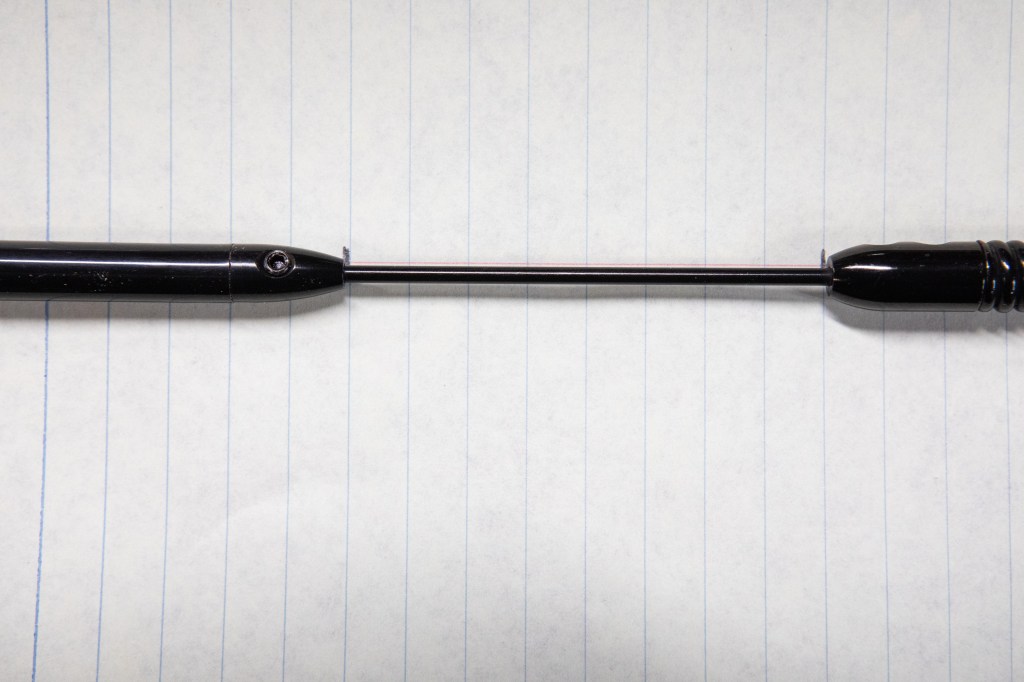
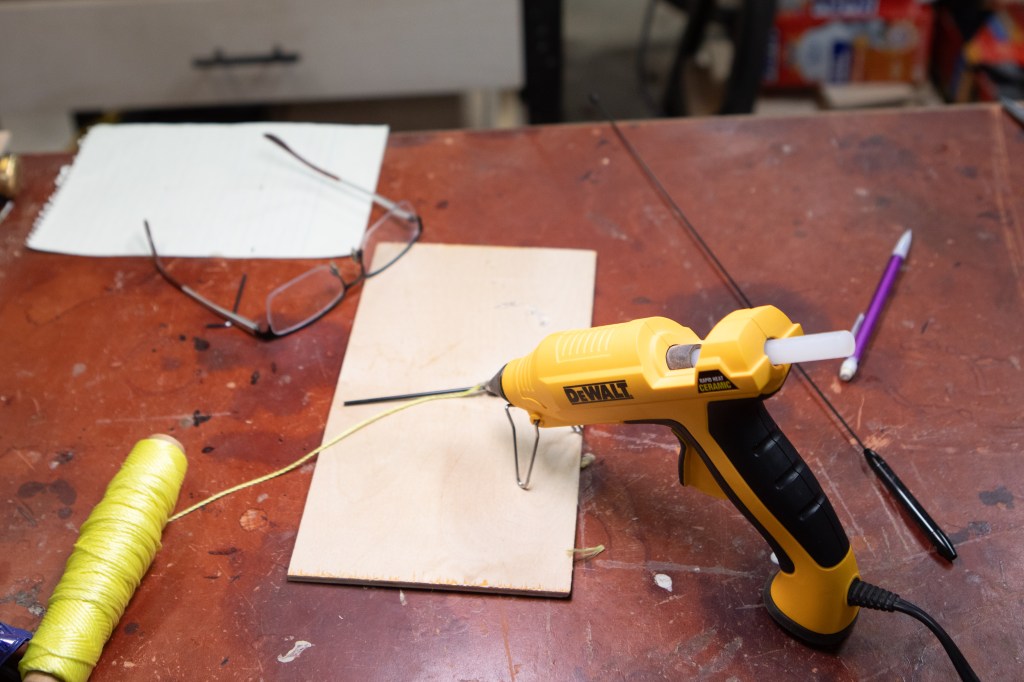
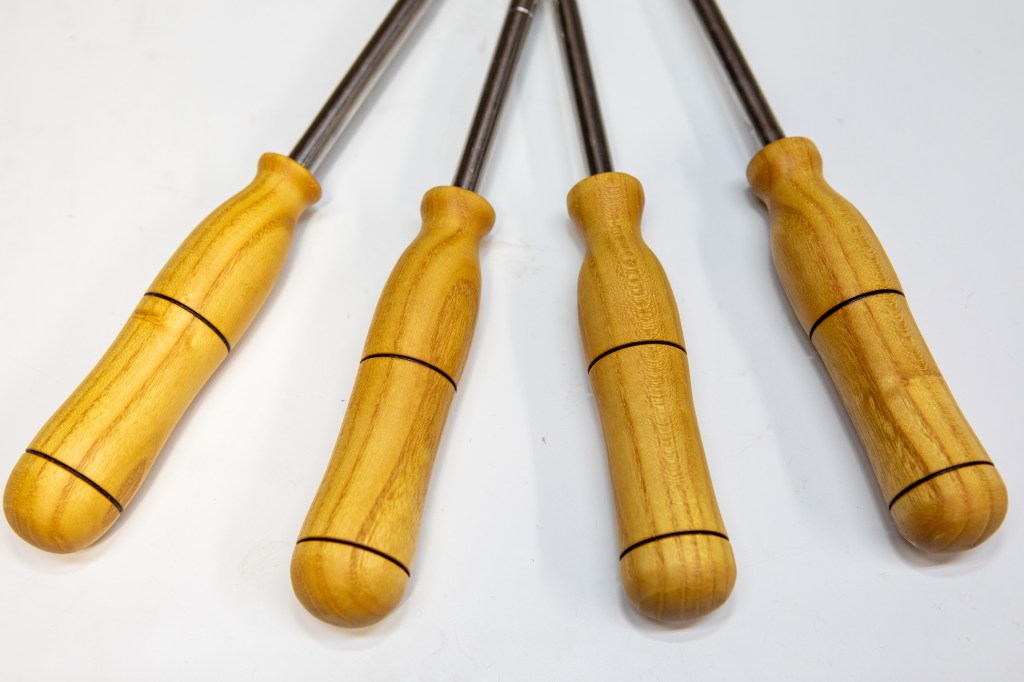
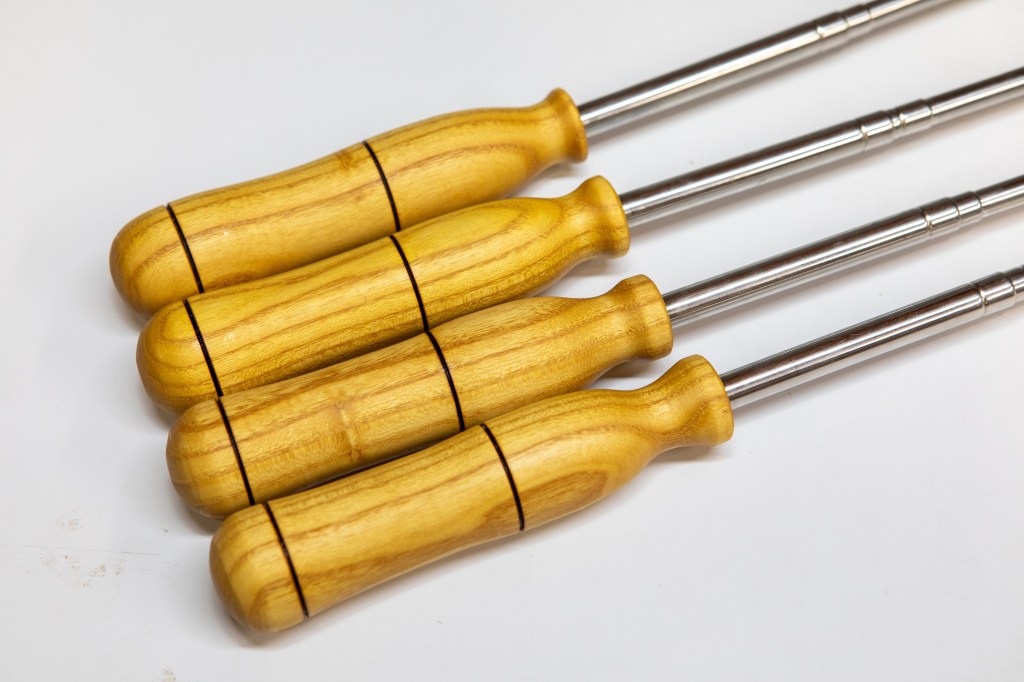
    A few months ago, we visited a Woodcraft where they had a Campfire Roasting Fork Turning Kit on sale, so I picked it up. I knew winter was coming and there would be some to get them made.

    That time came last week. I hunted through my wood stash and found a couple perfect pieces of Mulberry and got started turning a set of handles.

    The set of four came out nicely, they actually look like a matching set. Good thing I threw away the first one, the one I tried without sketching a profile – wow it was ugly.

    Anyway, fun project and I’m certain they will get put to use this year when camping.

  • Magic Carpet and Ice

    Since I only started in ham radio recently, and I haven’t gotten a permanent antenna setup yet, I’ve been running with a 10 meter vertical sitting in my front yard on a “magic carpet”, also known as a screen door screen. Fancy, isn’t it?

    I put it out there quickly before we had a bunch of snow so I could at least play on the radio during the inclement weather. Much to my surprise it was worked wonderfully. I’ve gotten to do FT-8, a little JS8Call, had voice calls with Europe, and sent emails with winlink. It has really far outperformed my expectations.

    This week is the first time I’ve been able to even see the screen, it has been covered in snow for weeks. It’s finally warming up a little and everything is melting, though it did freeze overnight.

    And that’s where today’s troubleshooting began. I noticed my SWR was up over 2 (usually less than 1.5) on 10m. I spent quite a bit of time outside with the NanoVNA trying to figure out what changed – and every time I tried something, it just got worse.

    I noticed there were frozen water droplets all over the screen, could that be what’s wrong? I set the screen out in the sun for an hour and let it all melt. After putting things back into place (actually a better location so the coax isn’t crossing our walkway), I’m happy to report an SWR of 1.1 right at 28.5Mhz!

  • Laser Engraved Amateur Radio License

    It’s it silly how many times the government issues a license or “important” document, one which you’re supposed to carry with you, and it’s just a piece of paper?

    That’s how these ham radio licenses are. Print-at-home, cut-and-fold, watch die in your wallet.

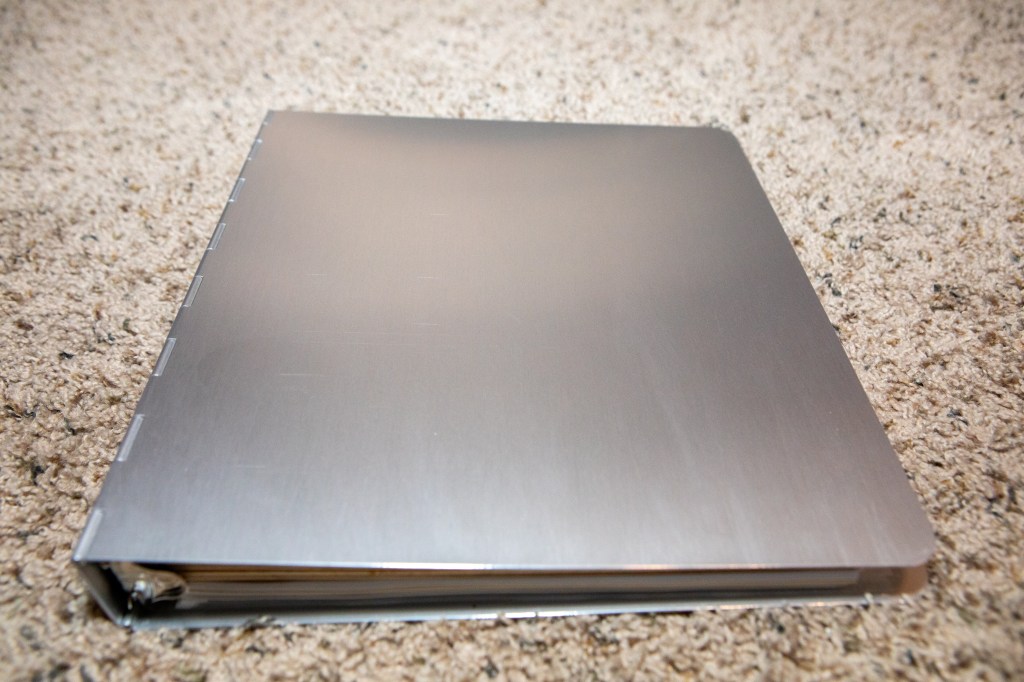
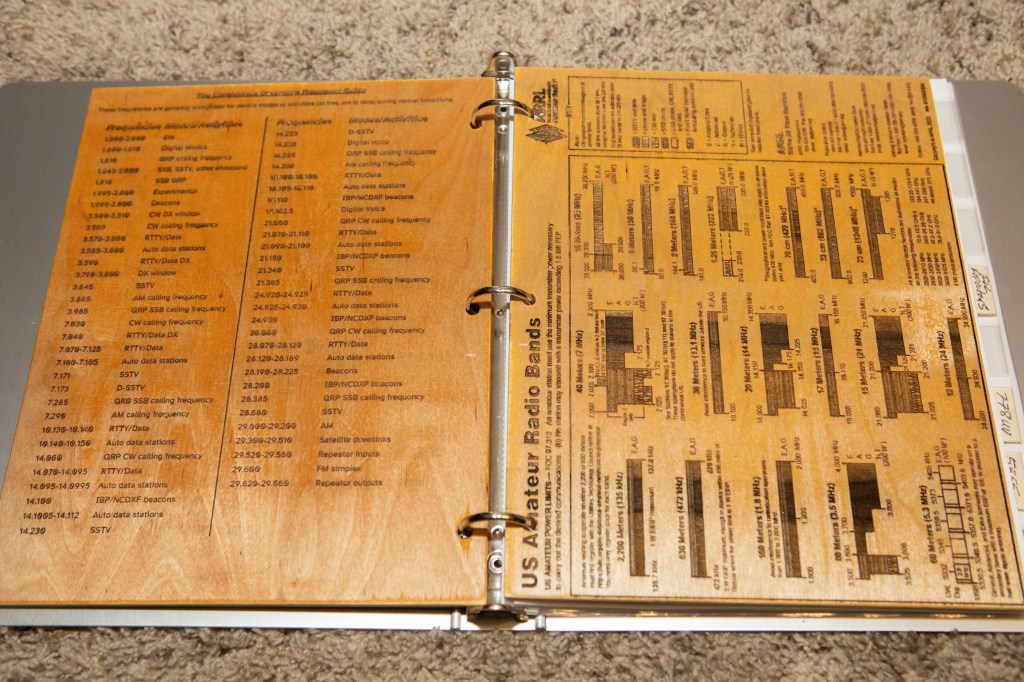
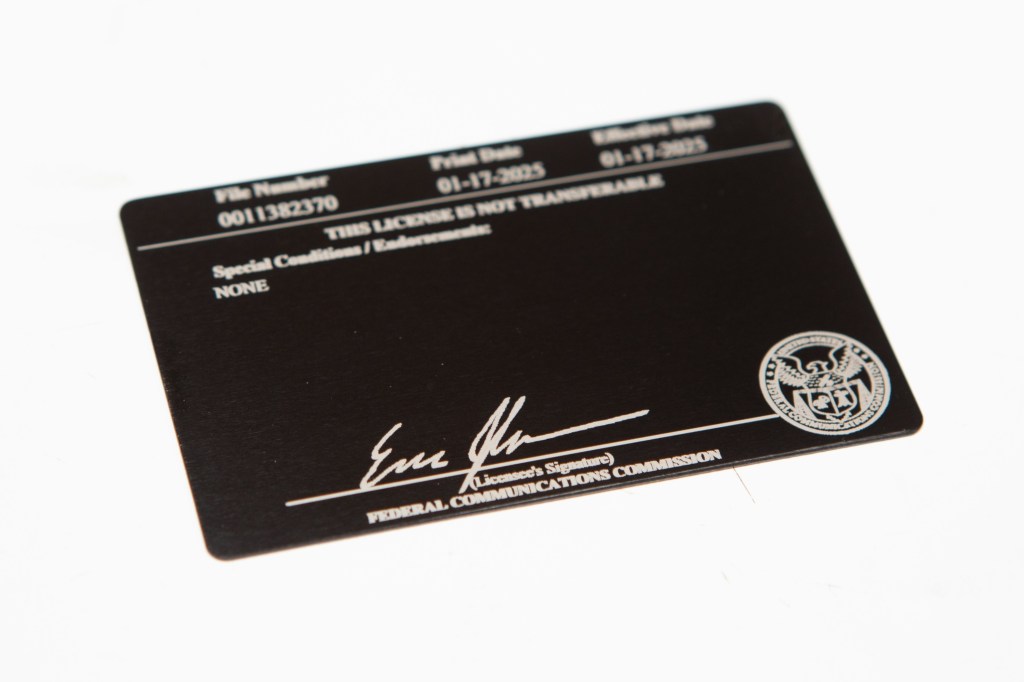
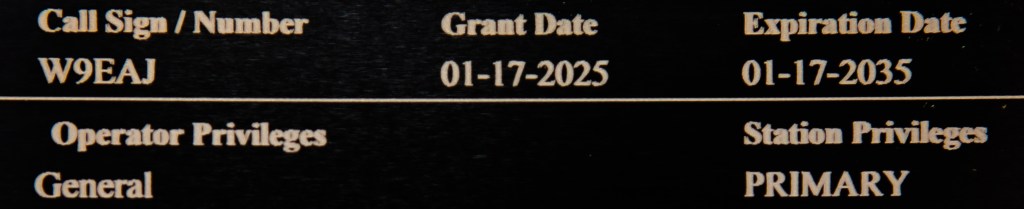
    I figured, hey, I have a laser engraver. Why not have a little fun with it and make something a little more robust. A quick search on Amazon netted me an inexpensive set of card-sized anodized aluminum cards. A little time in Lighburn later, I had my double-sided, engraved metal ham radio license.

    This is actually my second copy, which I made after upgrading to a General license and changing my callsign.

    Yeah, dorky thing to do. But it looks great!

  • Pencil Case

    Having gotten into ham radio, I’ve been assembling a small, portable kit of essentials for getting on the air and making contacts. Because I have a hard time hearing and recalling callsigns, I write down their fragments as I hear them if I am not by a computer for immediate logging. So I need to have pens and pencils at hand.

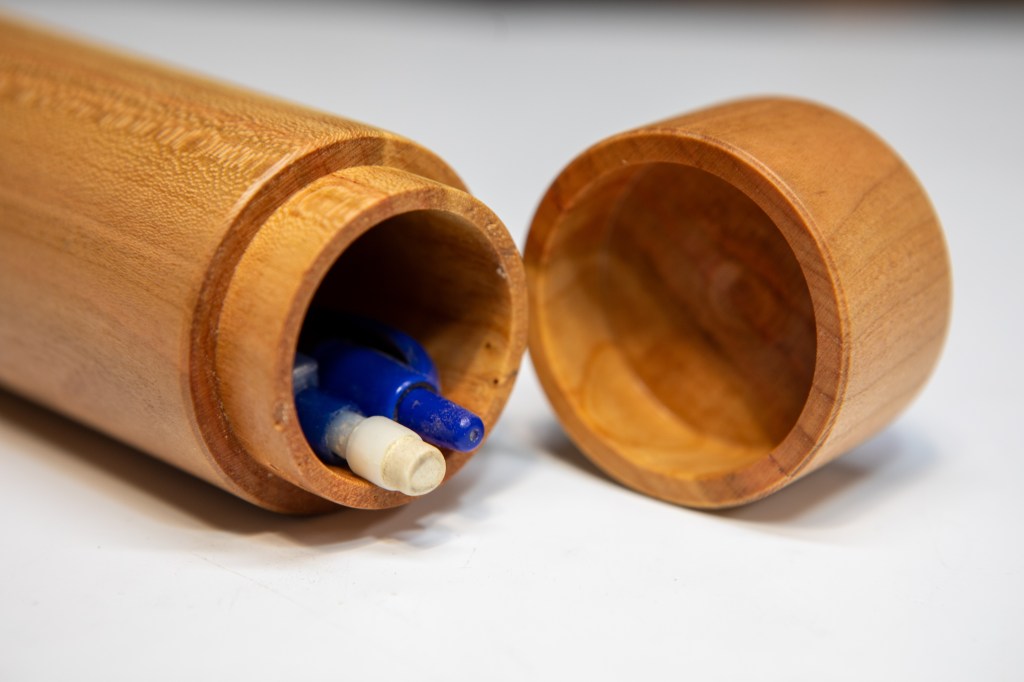
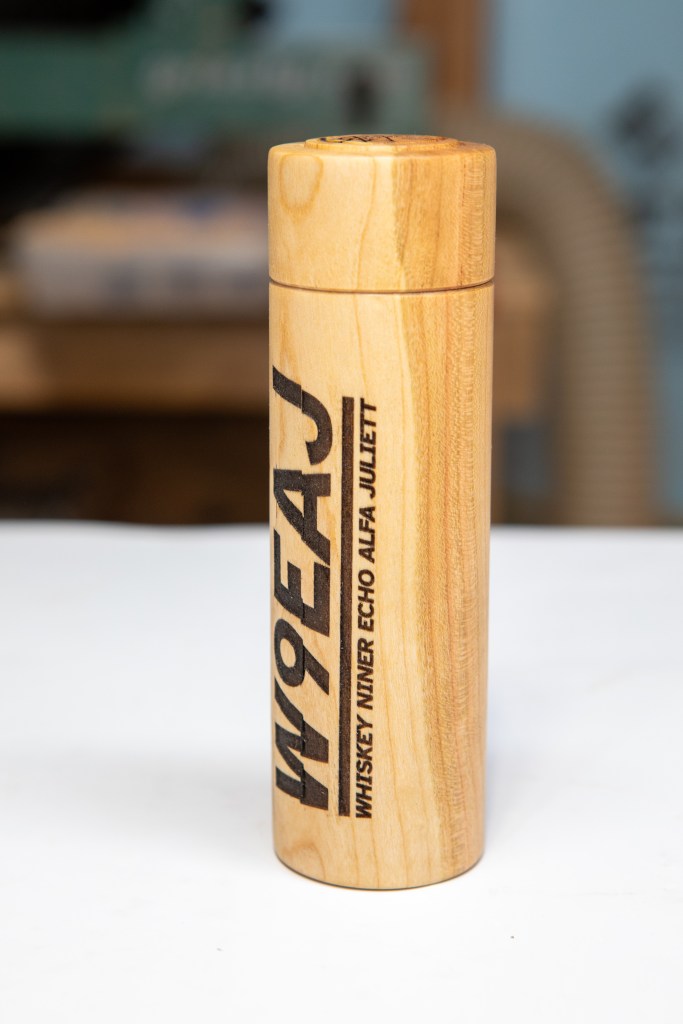
    Enter, my new cherry pencil case.

    I then used my laser engraver to put my brand new callsign on it. Well, that was the plan anyway. I ran into the all-too-common problem of the Laserpecker LX1 freezing mid-engraving and had a LOT of trouble trying to get it to restart exactly where it left off. That was further complicated because the rotary was involved.

    The result is that it looks great from a distance, but up close just makes me cringe. Oh well, it’s mine and will still hold a few pens and pencils just fine. It was a great proof of concept and was fun to mix a few hobbies.

  • New Callsign: W9EAJ

    New Callsign: W9EAJ

    Upon upgrading my amateur radio license to General last month, I begin looking for a vanity callsign to replace my KE9BPH originally issued when I first got my Technician license. I know I hadn’t been at this radio thing very long, but I was continually fumbling when trying to clearly speak the callsign. Difficult to remember, difficult to speak, just didn’t care for it.

    I spent quite a bit of time on RadioQTH – Available Calls but did not find any I liked. Then I read the fine print and learned that just because it doesn’t return as an option does not mean it’s unavailable. If a callsign has never been used, it won’t show up in those results!

    And that’s when I stumbled upon what is now, as of January 17th, 2025, my new callsign – W9EAJ. Easier to remember, easier to say, and quicker for me to identity. Win win.

    73.

  • Ham Radio Observations

    It has now been a few months since my first interaction with ham radio. In that time I’ve: passed the Technician and General tests; purchased and learned how to program a pair of handsets; purchased and programmed a mobile UHF/VHF radio for my truck; added an antenna to the truck; and setup and used a pair of HF radios to get on the 10 meter band, making a dozen or so long distance contacts.

    It’s been fun and full of learning. Here are a few things, in no particular order, which come to mind from my experience thus far:

    • The wide variety of power/connectivty options is frustrating, particularly since there is nowhere local to buy this stuff.
    • Ditto with the numerous coax connections and adapters.
    • I’m terrible at copying callsigns. It’s as if, by default, my brain has a 3 character buffer which, by the end of the callsign I hear, has discarded the beginning. I’ve taken to pencil and paper to write down callsigns calling CQ – it often takes hearing it multiple times, between radio noise and accents, to get it correct.
    • Antennas are confusing, I need to learn more here.
    • I need to figure out a permanent antenna setup, the small vertical in my front yard is less than ideal.
    • NanoVNA is a great learning tool.
    • I’m appreciative of AnyTone products – they’re workable at a great price.
    • I need to get the aforementioned connectors, adapters, jumpers, tools, etc. organized.
    • The local hams are friendly and eager to help.
    • The patchwork of software and systems everyone relies on is reminiscent of early personal computing days, and the BBS scene. I was surprised by this, and it’s a little refreshing.
    • I need to settle on a logging system.
    • I’m still hesitant to key up on the local repeater in response to chatter.
    • Putting names to callsigns takes some time.

    So that’s what comes to mind as I sit here this evening. Maybe I’ll update the list if more things come up.

    Here’s to learning!

  • General Upgrade

    I passed my test for the Amateur Radio Technician license back in October. It took all of a few hours for me to get curious enough to dive deeper into the subject and start preparing for the General license.

    Not wanting to just memorize the test bank, I hit Amazon in search of good reference material.

    What I ended up purchasing was Radio Theory Handbook – Beginner to Advanced by Ron Bertrand.

    After reading this, I went through Hamstudy.org and began preparing in ernest for the General. The book gave me the background I was looking for and I recommend it for others looking for more thorough explanations of the fundamentals.

    Last night, December 26, 2024, via the Tennessee Valley Exam Team’s remote testing, I passed the General test and upgraded my license!

  • Small Cheese Slicer

    Here was a fun little project.

    Ana and I sometimes spend Friday evenings at a local microbrewery, Springfield Beer Company, while we wait for the kids to be done with swim practice. Since bringing you own food in is encouraged, and we’re typically pretty hungry at that time of day, we often will pick up some cheese and charcuterie meats to snack on with our beverages.

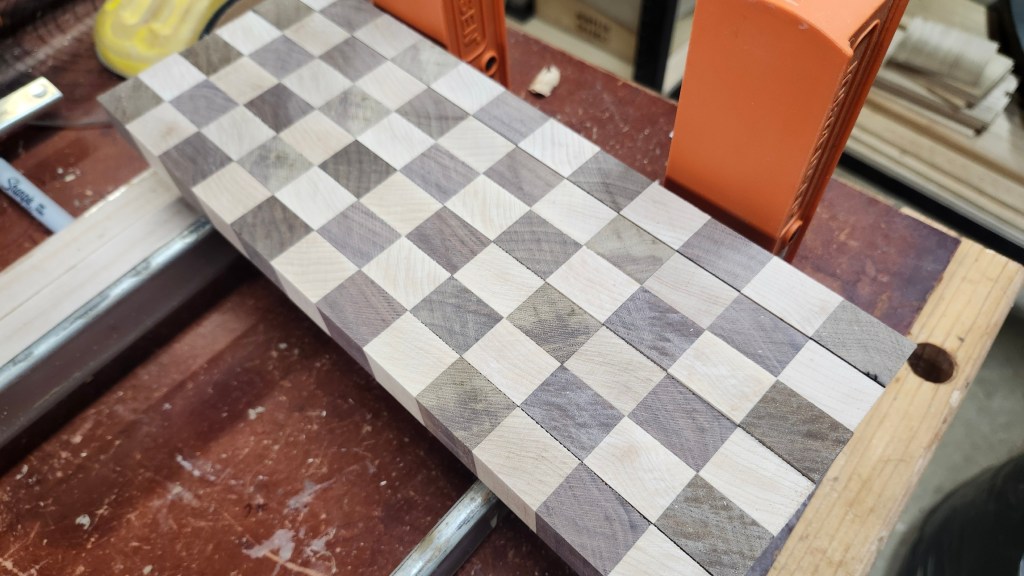
    To make things a little easier, I picked up a small cheese slicer kit and whipped up a convenient slicer/charcuterie board that’s easy to bring along.

    I started with a checkerboard pattern, with cherry and walnut.

    Then to make it a little more interesting, I made a template in the shape of the state of Illinois on my laser engraver and took it to the router.

    The final result looks great and fits the bill. If you happen to stop in on a Friday evening, there’s a chance you’ll see it!

  • Bradford Pear

    The trees in the boulevard in our neighborhood are mostly Bradford Pear. Anyone familiar with these trees knows how weak they are and how poorly they stand up to storms.

    One of these directly in front our house succomed to a storm this summer and a tree service came and cut it down. I was home when they started their work and asked if I could have a couple pieces of the trunk. They were more than happy, and left me with these:

    I processed, rough turned a few bowsl, and set them aside to dry.

    Now, five months later, the first of the batch was ready to turn (the smallest one). Wow, does it turn nice and easy. There’s one TINY crack in it, but it did make a good looking bowl.

    I’m looking forward to the other pieces getting dry enough to finish this winter.

  • Explorer QRZ-1 and CHIRP

    Last week I took advantage of the New Ham Jumpstart Program offered by QRZ.com and Gigaparts. As I only have a pair of Baofeng UV-21Rs, I thought it would be good to have another inexpensive, but higher quality, radio to compare and constrast with. The Explorer QRZ-1 arrived last Friday.

    I won’t go into a long review, but rather mention a quirk/bug I encountered with using CHIRP to program it instead of the provided “QRZ-1 Programmer” software by rtsystems.com. I have a local repeater all programmed in, but even though the receive CTCSS tone was correct, it wouldn’t break squelch until I performed a Tone Scan. If I powered off and back on, I had to re-do the scan in order for traffic to break squelch.

    After an evening discussing the issue with others on the local weekly net, I did some poking around and discovered that if I used the QRZ-1 Programmer software to download, and re-upload, the programming (without changing anything), the radio worked as expected. The tone configuration and everything looked correct after downloading, so I don’t know what was going wrong – other than the CHIRP driver is clearly marked/warned as being experimental.

    I need to do some more troubleshooting to see if I can get even more specific repro steps before I file an issue. When I did the original upload from CHIRP, I copied the memory entries from my Baofeng image rather than re-enter everything by hand. I’m wondering now if that was the ultimate issue.

    Anyway, I hope this information can help anyone else out there starting out with this device.

    73.